
Pensions are not something we learn about at school. Even if you are informed about them as an adult, legislation can change, and things we were told by previous employers or earlier generations can quickly become outdated.
Misconceptions and myths about pensions can end up costing you, which may mean your pension is held back and you aren’t able to achieve the retirement lifestyle you have envisioned.
So, read on to discover five commonly held pension myths.
1. “I can only pay £60,000 into my pension each year”
Each year, you can contribute up to the Annual Allowance to your pension while still receiving full tax relief on your contributions.
In the 2026/27 tax year, the Annual Allowance for most people is either £60,000 or 100% of your earnings, whichever is lower. Because of this limit, many people think they can only contribute this much each year.
However, you can also carry forward any unused Annual Allowance you have from the previous three tax years, meaning you could contribute up to £240,000 (2026/27). This would only be the case if you hadn’t made any contributions for three years and you had enough cash to contribute.
For instance, if you received a significant inheritance, sold your business, or sold a second property, you may be able to contribute a considerable portion to your pension while still enjoying tax relief.
Moreover, employer pension contributions aren’t limited by your earnings, and you can contribute up to £60,000 tax efficiently even if your salary is lower. So, if you run a business, you may be able to make large contributions through your company using the full Annual Allowance and carrying forward unused amounts, while keeping your taxable income low. This can also help to reduce your Corporation Tax bill.
A financial planner can help you explore how to make the most of your Annual Allowance and pension contributions.
2. “I can only pay into my own pension”
Tax-efficient pension contributions are not limited to your own pension. You can contribute to other people’s pensions, and the contributions will be relieved at the recipient’s marginal rate, provided it remains within their Annual Allowance.
You may want to do this if you have used your full Annual Allowance and carried forward previous years’ allowances, and you want to keep more of your income efficient while supporting your loved ones.
You may also do it if you already have a significant pension and want to help build your partner’s pension. This may also be beneficial for estate planning reasons.
For instance, if you have a defined contribution (DC) pension and die before 75, your beneficiaries can usually receive your pension benefits free from Income Tax, provided the amount they receive is within the Lump Sum and Death Benefit Allowance (LSDBA), which is £1,073,100 in 2026/27.
So, you may want to explore contributing to your partner’s or children’s pensions to keep yours below the LSDBA.
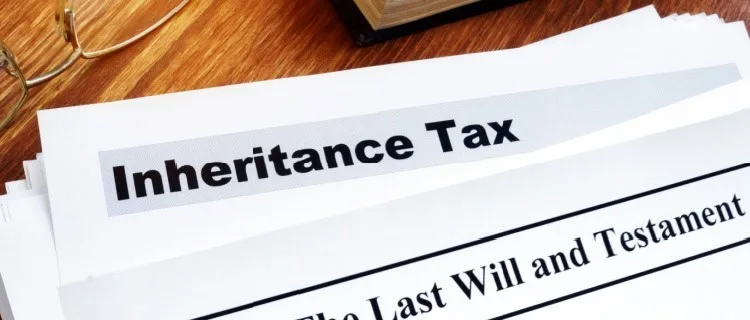
3. “Pensions aren’t subject to Inheritance Tax”
Pensions have historically not been considered as part of your estate for Inheritance Tax (IHT) purposes. However, the rules are set to change.
Under current proposals, from April 2027, pensions will form part of your taxable estate and will be within the scope of IHT, though the exact details have yet to be finalised.
Government estimates predict that around 50,000 estates will be affected by this change and will either face a higher IHT bill than they would have done or become liable for the first time.
If you have yet to factor this upcoming change into your estate plan, it’s important to do so as soon as you can. The following strategies may help you to accommodate the new rules:
- Ensure you make full use of your nil-rate bands and allowances
- Use more of your pension while you’re alive or gift portions of it
- Explore annuity options
- Take out life insurance in trust
Before opting for any IHT mitigation strategies to help protect your pension, it’s important to speak to a financial planner to ensure your plan best serves your goals.
4. “It’s too late / early to save in my pension”
You may think you have reached an age at which there is no longer any point in making further pension contributions.
However, unless you are deep into retirement and still have a significant pension, this is rarely the case.
Pension contributions you make within your Annual Allowance automatically receive 20% tax relief, and you can claim a further 20% or 25% if you are a higher- or additional-rate taxpayer. So, the money you contribute to your pension is far more efficient than if you hold it in cash.
Moreover, even if you are in your 60s or 70s, you may still have two, three, or more decades of retirement ahead of you. Because pensions are invested, the funds can benefit from compounding, where returns generate further returns, which can see your pension grow exponentially, though the value can also fall.
However, it’s important to note that if you have already started to draw from your pension, any further contributions you make are limited by the Money Purchase Annual Allowance (MPAA). This limits your Annual Allowance to £10,000 a year.
Conversely, if you or someone you know thinks they are too young to start saving into a pension, it’s important to dispel that myth now.
The earlier you get started on building your pension fund, the better. Small contributions made when you’re young can grow considerably over the years, thanks to the power of compounding.
Those under 22 won’t be automatically enrolled into their employer’s workplace pension, but they can ask to join it. Children under 18 can’t set up a personal pension, but someone over 18 can set one up for them. Indeed, investing in a pension on behalf of your child or grandchild can be one of the most effective ways to build their long-term financial security.
5. “I can rely on selling my business or house for my pension”
This final entry isn’t exactly a myth. Rather, it is a common strategy used by business owners or the asset-rich, which comes with considerable risks. These include:
- Not finding a buyer
- Selling at a lower price than you anticipated
- Factors outside your control, such as inflation and market performance, affecting the value of the sale
- Missing out on tax-efficient opportunities.
While a sale may form part of your retirement income plan, it’s a good idea to have a separate fund in your pension that isn’t reliant on a single event.
Get in touch
A financial planner can help you separate the fact from the fiction when it comes to pension planning, putting you in a stronger and more secure position going forward.
To speak to a financial planner, get in touch.
Email info@blueskyifas.co.uk or call us on 01189 876655.
Please note
This article is for general information only and does not constitute advice. The information is aimed at individuals only.
All information is correct at the time of writing and is subject to change in the future.
Please do not act based on anything you might read in this article. All contents are based on our understanding of HMRC legislation, which is subject to change.
The Financial Conduct Authority does not regulate estate planning, cashflow planning, tax planning, trusts, Lasting Powers of Attorney, or will writing.
A pension is a long-term investment not normally accessible until 55 (57 from April 2028). The fund value may fluctuate and can go down, which would have an impact on the level of pension benefits available.
The value of your investments (and any income from them) can go down as well as up and you may not get back the full amount you invested. Past performance is not a reliable indicator of future performance.

 Production